TEMP08Firmware history from 1.00 to 4.06
Midon Design 1-Wire kits Every sensor,
on one wire.
The Midon Design kits turned a single twisted pair into a house full of thermometers, rain gauges, humidity sensors and relays. This reference covers each kit in detail: the commands, the pinouts, the compatible sensor chips, the firmware releases and the ways to read the same bus from a current computer.
First published February 1, 2001 · Text rewritten 2026
The same sensors are read today from
- Raspberry Pi
- Home Assistant
- OWFS
- HomeSeer
- USB-serial
- Linux w1
60
sensors on one TEMP08 interface
two
conductors carry data and return
3+ yrs
of samples stored by a LOG08-II
300 ft
of CAT-5 cable to the farthest sensor
The kits, explained one page at a time.
Each kit has its own page with the parts it used, the sensors it reads, the commands it accepts and the questions owners asked most often, and the product line page lists them all in one place. The TEMP08 has a full set of sub-pages: instructions, firmware history, HomeSeer setup, the frequently asked questions and the RJ11 versus RJ12 connector notes.
TEMP08
The second-generation 1-Wire to RS232 bridge. Temperature, humidity, rain, wind, counters, relays and LED displays share one bus, and the host reads plain lines of text.
- 60devices on one bus
- 9600bps serial, 8N1
- 4.06last firmware, 2018
RJ11 vs RJ12
Four contacts or six, and which of them carry the data line, ground and supply.
Stand-aloneLOG08-II
Records the bus with no PC attached and hands the time-stamped readings over later.
1WIO · RELAY05 · 1WSwitch
Relays, opto-isolated inputs and LED indicators: the output side of a 1-Wire house.
How a 1-Wire house is wired
A 1-Wire network needs only two conductors: a data line and a ground return. Every sensor on the bus has its own factory-programmed 64-bit address, so dozens of devices can hang off the same pair and still be read one by one. The interface sends a reset pulse, calls a device by its address and listens for the answer, all with precise microsecond timing that the kit handles so the host computer does not have to.
In a typical installation a single run of CAT-5 cable leaves the interface and passes through the house, with short drops to a thermometer in each room, a humidity sensor in the cellar and counters for the rain gauge and anemometer on the roof. The network wiring guide explains why a linear bus with short stubs works better than a star, and how cable length and topology affect reliability.
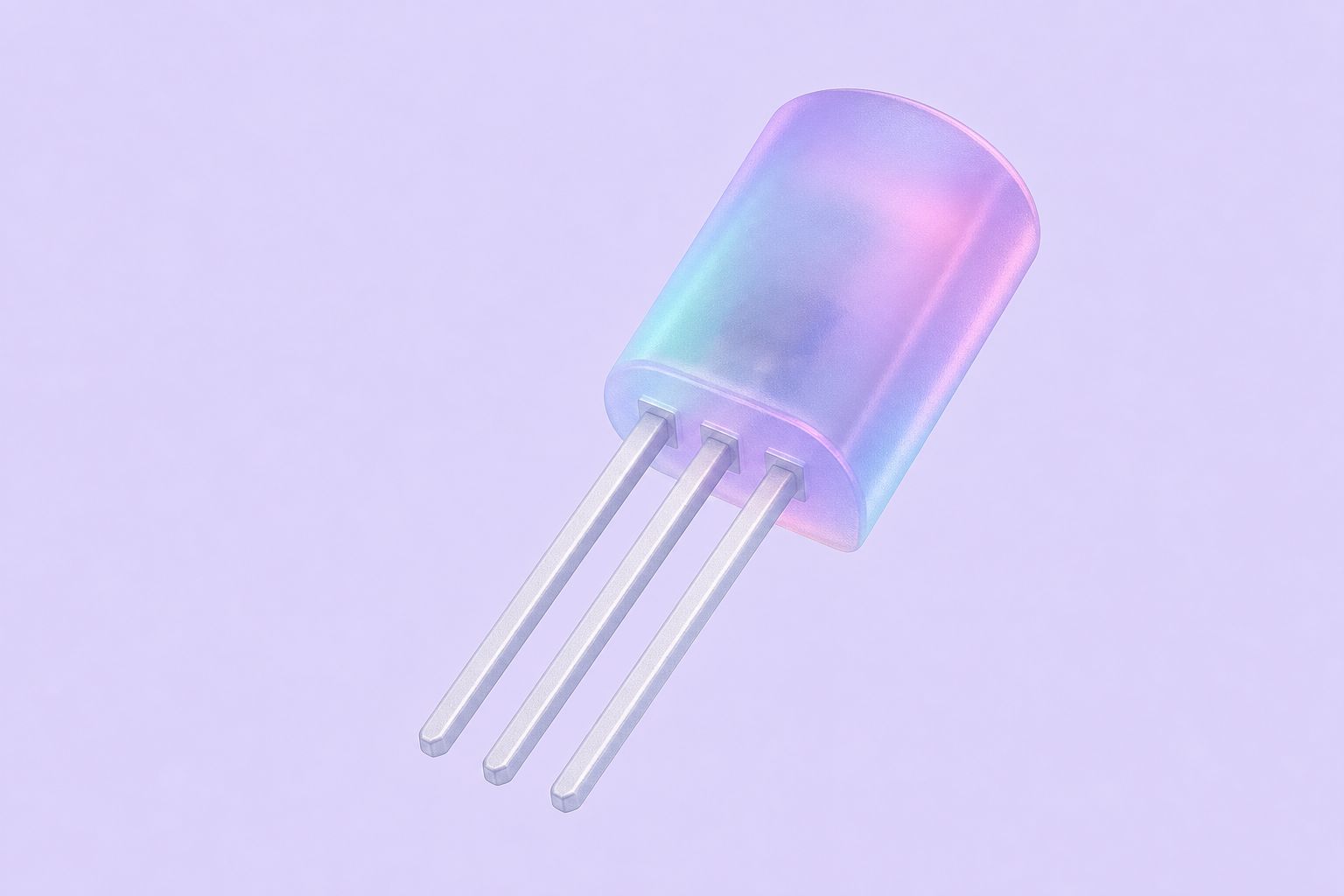
The sensor chips themselves are small: most thermometers use the three-legged TO-92 package shown at the top of this page. The sensors page lists the families the kits could read, from the DS18S20 and DS18B20 thermometers to the DS2438 used for humidity and the DS2423 counter.

What every kit page covers
- The command setINI, DIS, RLY, SCK and the rest, with what each one does and which firmware added it.
- Pinouts and wiringWhich contact of each modular jack carries data, ground and the supply voltage.
- Firmware historyFrom version 1.00 of August 2003 to version 4.06 of October 2018, release by release.
- Current hostsUSB-serial adapters, Raspberry Pi, OWFS and Home Assistant as ways to keep reading the bus.
Find the kit by what it does
I/O & relays
The output side of a 1-Wire house: switching loads, reading door contacts and push buttons, and lighting indicator LEDs from the same interface.
- 1WIO, four relays, four inputs, up to eight LEDs
- RELAY05, eight DPDT relays rated 10 A
- RS232Relay, relays straight from a serial port
Programmers & IR
The workshop tools behind the kits, an infrared interface for audio and video equipment, and a status display for X-10 powerline modules.
- 68HC705 programmer and the PROG05 kit
- CIR-II, PC to infrared interface
- STATX10, X-10 status display
Sensor families on the bus
Every chip family the kits could read, grouped by what it measures. Each ring leads to the page that explains how the chip was used, what it needs on the bus and which kit reads it.
Kits that were built by hand
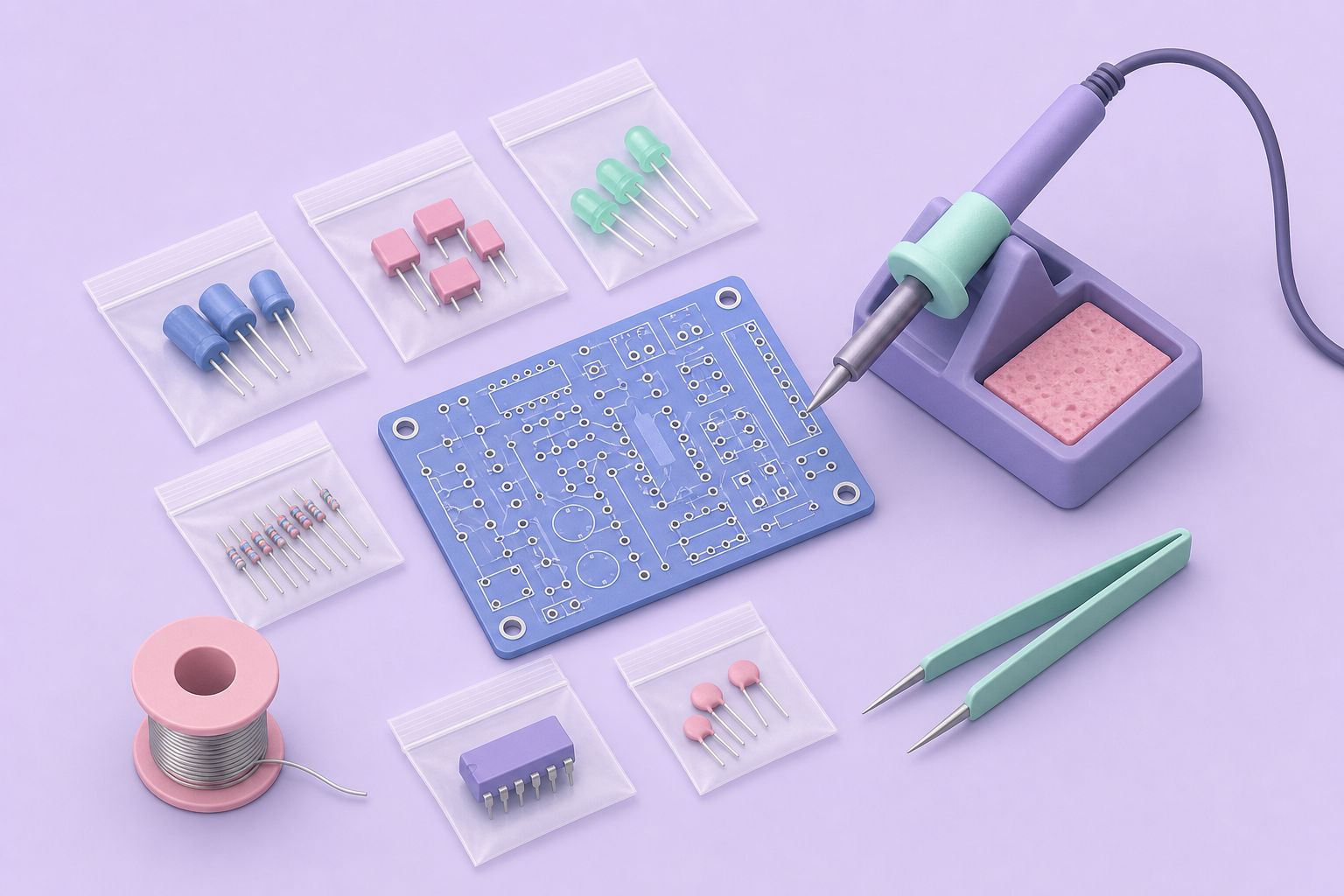
Midon Design sold most of its products as kits: a printed circuit board, a bag of components and a programmed microcontroller, with assembly instructions and a parts list. The construction notes follow a familiar order: integrated-circuit sockets first, then the resistors and capacitors, then the larger parts, with the programmed chip going in only after the board has passed a power test.
That heritage shows in the documentation. Each kit page describes the circuit block by block, and the parts reference explains what the common components do: the sensor chips, the modular connectors, the voltage regulators and the relays. The documents page lists the manuals and application notes, and the programmer pages show how the 68HC705 microcontrollers at the heart of several early kits were programmed.
The company stopped selling at the end of 2023. The TEMP08, TEMP05 and loggers remain in service in many homes and weather stations, and their owners still look up command syntax, connector pinouts and sensor compatibility, which is exactly what these pages set out to answer. The about page tells the company's story and what this reference covers, and the links page points to 1-Wire and home automation resources elsewhere.
“What are the differences between a DS1820 and a DS18S20?”
One of the questions the TEMP08 FAQ answers in detail, together with the DS18B20 and the DS1822: family codes, resolution, conversion time and which firmware reads which part.
Read the FAQNew to the bus? Start with the guides.
Four guides cover a weather station with rain gauge and wind sensors, humidity measurement with the DS2438, network wiring and cable length, and running 1-Wire sensors on a Raspberry Pi, OWFS or Home Assistant.
1-Wire on current hostsQuestions and answers
What is a 1-Wire network?
A 1-Wire network is a bus of small sensor and switch chips that share one data line and a ground return. Each chip carries a unique 64-bit serial number, so a single interface can find, address and read every device on the same twisted pair, one after another, without separate wiring per sensor.
Which Midon Design kit connects 1-Wire sensors to a PC?
The TEMP08 is the second-generation serial interface and the most complete of the line: it reads up to 60 sensors over RS232 and handles temperature, humidity, rain and wind counters, relays and LED outputs. The earlier TEMP05 did the same job for a weather station plus up to 20 DS18S20 thermometers.
Can the kits still be bought?
No. Midon Design stopped selling kits and parts at the end of 2023. The pages here describe how each kit works, how it was wired and how its commands behave, which is what owners need to keep an existing installation running or to move the sensors onto a newer host.
What is the difference between RJ11 and RJ12 on these kits?
Midon Design used RJ11 for the four-contact modular jack and RJ12 for the six-contact one. Both take the same plug body; what matters is which contacts carry the data line, ground and supply. The RJ11 versus RJ12 page lists the pin assignments for the TEMP08 and related standards.
Can the TEMP08 run on a Raspberry Pi or Home Assistant?
Yes, through a USB-to-serial adapter, because the TEMP08 only needs an RS232 port and a program that reads lines of text. The guide to 1-Wire on current hosts compares that route with direct USB 1-Wire adapters, the Linux w1 driver on the Pi and OWFS.